Imagine you invest $10,000 in a friend’s business, and at the end of the year, that business generates $2,000 in profit. You’d probably be eager to know what return you earned on your investment. This is precisely what Return on Equity (ROE) measures—how efficiently a company uses shareholders’ funds to generate profit.
What is ROE and Why Does it Matter?
ROE is a cornerstone metric in financial analysis, offering insights into a company’s profitability and management efficiency. Investors, business owners, and analysts rely on ROE to compare firms, assess performance, and make informed investment decisions. But like any metric, ROE has nuances that go beyond the basic formula.
The ROE Formula: Breaking it Down
At its core, ROE is calculated as:
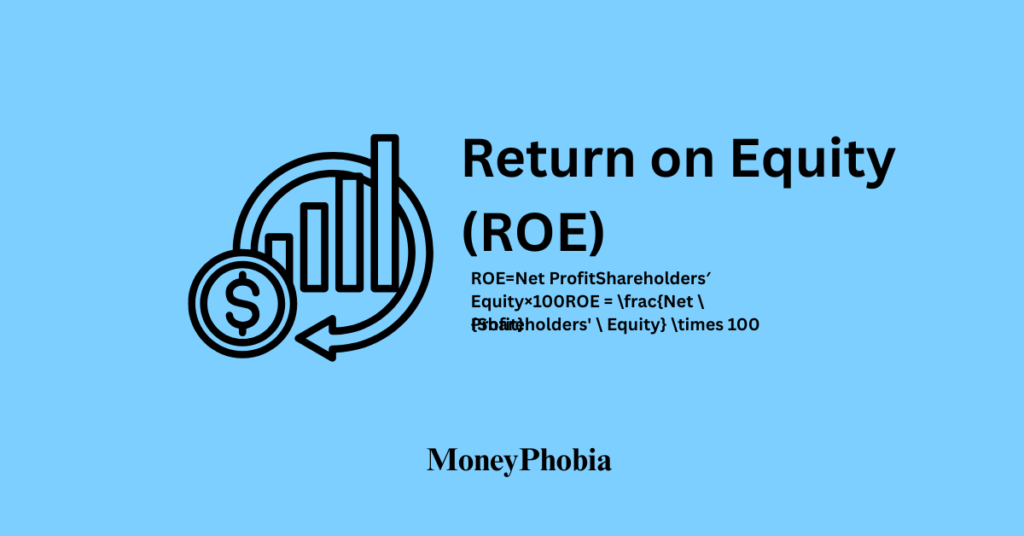
ROE=Net ProfitShareholders′ Equity×100ROE = \frac{Net \ Profit}{Shareholders’ \ Equity} \times 100
Where:
- Net Profit is the company’s earnings after all expenses, taxes, and costs.
- Shareholders’ Equity represents the owners’ stake in the company (total assets minus liabilities).
For instance, if a company reports a net profit of $1 million and shareholders’ equity of $5 million, its ROE is:
ROE=1,000,0005,000,000×100=20%ROE = \frac{1,000,000}{5,000,000} \times 100 = 20\%
This means the company generates a 20% return on every dollar of equity invested—an attractive proposition for investors.
Why High ROE Isn’t Always a Good Thing
A high ROE can be a positive sign, indicating that a company effectively turns equity into profits. However, not all high ROEs are created equal. Here are some important considerations:
1. Leverage Can Inflate ROE
Companies can boost ROE by using debt to reduce the denominator (equity). For example, if a company borrows heavily, it can increase net profit without requiring additional equity. While this might make ROE look impressive in the short term, excessive debt introduces financial risk. Consider two companies:
- Company A: $2M net profit, $10M equity → ROE = 20%
- Company B: $2M net profit, $5M equity (due to debt financing) → ROE = 40%
At first glance, Company B seems more efficient. However, if an economic downturn hits, high debt obligations could strain its finances, making it riskier than Company A.
2. Industry Comparisons Matter
ROE varies significantly across industries. A tech company might have an ROE of 25%, while a utility firm may operate at 10%. This doesn’t mean the utility firm is inefficient—its business model simply requires high capital investment, leading to lower ROE. Thus, comparing ROE makes sense only within the same sector.
3. One-Time Gains Can Skew ROE
Sometimes, companies report unusually high net profits due to one-off events like asset sales or tax benefits. If a firm sells a piece of real estate for a massive gain, its net profit—and by extension, ROE—could spike temporarily. Investors should dig deeper to understand if ROE reflects sustainable earnings growth or a short-lived windfall.
Real-World Examples: ROE in Action
Apple Inc. (AAPL): A Case of Consistently High ROE
Apple has historically maintained a high ROE, averaging around 50% in recent years. This is a result of strong brand loyalty, high-margin products, and a capital-light business model. Apple doesn’t own manufacturing plants (outsourcing to Foxconn instead), which keeps equity lower while profits remain high.
Amazon (AMZN): Lower ROE But for a Good Reason
Amazon, on the other hand, often reports a lower ROE than Apple. Why? Because it reinvests heavily in growth, expanding warehouses, logistics, and cloud services. This increases shareholders’ equity, reducing ROE. However, this reinvestment fuels long-term dominance, proving that a lower ROE isn’t necessarily bad.
How Investors Should Use ROE in Decision-Making
1. Compare Over Time
A company’s ROE should be analyzed over multiple years. A rising ROE suggests improving efficiency, while a declining ROE could signal trouble.
2. Pair ROE with Other Metrics
ROE alone isn’t enough. It should be analyzed alongside:
- Debt-to-Equity Ratio: To check if high ROE is due to excessive leverage.
- Return on Assets (ROA): To see how efficiently total assets generate profit.
- Profit Margin: To understand if high ROE comes from genuine profitability.
3. Look at the Business Model
A high ROE in a stable, low-debt company is a strong positive. Conversely, a high ROE in a business with declining revenues or mounting debt is a red flag.
ROE as a Compass, Not a Crystal Ball
Return on Equity is one of the most powerful financial indicators, but it should never be viewed in isolation. A strong ROE can signal a well-run, profitable company, but it’s essential to dig deeper. Is the company using debt to artificially inflate returns? Is the growth sustainable? Does it align with industry norms?
For investors, ROE serves as a compass—pointing toward potentially strong investments—but the real treasure lies in a holistic analysis of the company’s fundamentals. By combining ROE with broader financial insights, investors can make smarter, more informed decisions in an ever-changing market.

Recent Posts
Could Gold (XAU/USD) Cross $6,000 in the Coming Months?
Tukaram Mundhe Biography: Age, Education, IAS Career, Wife, Family, Salary, Net Worth & More
NISM-Series-XV: Research Analyst Certification Examination
NISM-Series-II-A: Registrars to an Issue and Share Transfer Agents (Corporate) Certification
NISM-Series-I: Currency Derivatives Certification Examination
Ravneet Singh Bittu: Biography, Age, Education, Wife, Political Career, Net Worth & More
Pawan Kumar Chandana: Biography, Age, Education, Net Worth, Wife, Skyroot Aerospace & More
Aryan Kelvin (Aman Pandit): Age, Biography, Height, Village, Net Worth & More
OFSS Bihar Portal 2026: Complete Guide for 11th Admission, Login, Merit List & Spot Admission
Skyroot Aerospace Vikram-1 Launch: India's First Private Orbital Rocket Set for Historic Mission
Abhijeet Dipke Joins Protest at Jantar Mantar, CJP Raises Concerns Over Civil Rights
JPMorgan Invests $24 Million to Boost US Shipbuilding Industry